Understanding Blockchain And Modern Web3 Technology
The internet has evolved rapidly over the past few decades. From static websites during the early internet era to interactive social platforms and cloud-based applications, technology continues transforming how humans communicate, work, and conduct business. Today, blockchain and Web3 are becoming two of the most discussed technologies shaping the future of the digital world.
What Is Blockchain?
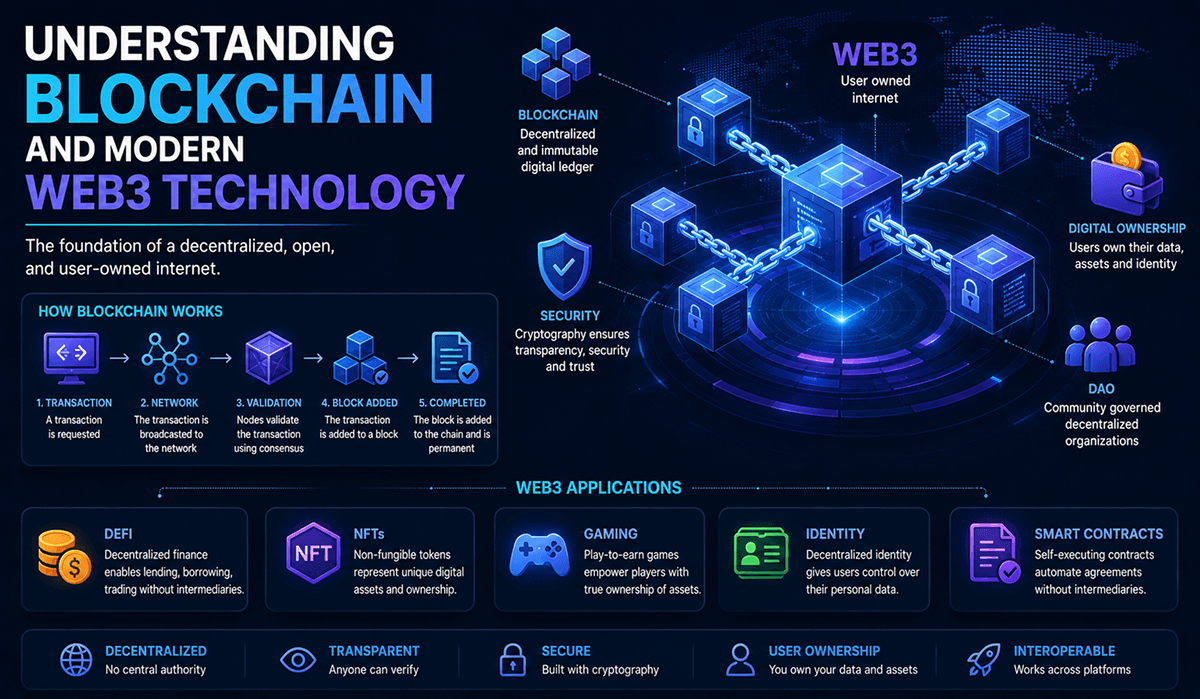
Blockchain is a decentralized digital ledger technology designed to securely record transactions across multiple computers. Unlike traditional databases controlled by a single authority, blockchain operates through distributed networks where every participant maintains a copy of the data.
Each block in the blockchain contains transaction data, timestamps, and a cryptographic hash connected to the previous block. This structure creates a chain of secure and immutable records. Once information is stored on the blockchain, altering it becomes extremely difficult without network consensus.
Blockchain technology first gained popularity through Bitcoin, the world’s first decentralized cryptocurrency introduced in 2009. However, blockchain applications now extend far beyond digital currencies.
Key Features Of Blockchain Technology
One of the main reasons blockchain technology attracts global attention is its powerful features. These features include decentralization, transparency, security, immutability, and efficiency.
Decentralization removes the need for intermediaries such as banks or centralized companies. Transactions occur directly between participants through peer-to-peer systems.
Transparency ensures that blockchain data can be verified publicly. Anyone can track transactions on public blockchains like Bitcoin and Ethereum.
Security is enhanced through cryptographic algorithms that protect network integrity. Blockchain networks are resistant to hacking because altering data requires controlling most of the network.
Immutability means recorded data cannot easily be changed or deleted. This creates trustworthy digital records for businesses, governments, and users.
Efficiency improves because blockchain automates processes using smart contracts and reduces dependency on third-party verification.
What Is Web3?
Web3 refers to the next generation of the internet powered by blockchain technology. Unlike Web2 platforms dominated by centralized corporations, Web3 focuses on decentralization, digital ownership, privacy, and user control.
In Web2, users depend heavily on centralized platforms such as social media companies, streaming services, and online marketplaces. These companies own user data and control platform policies.
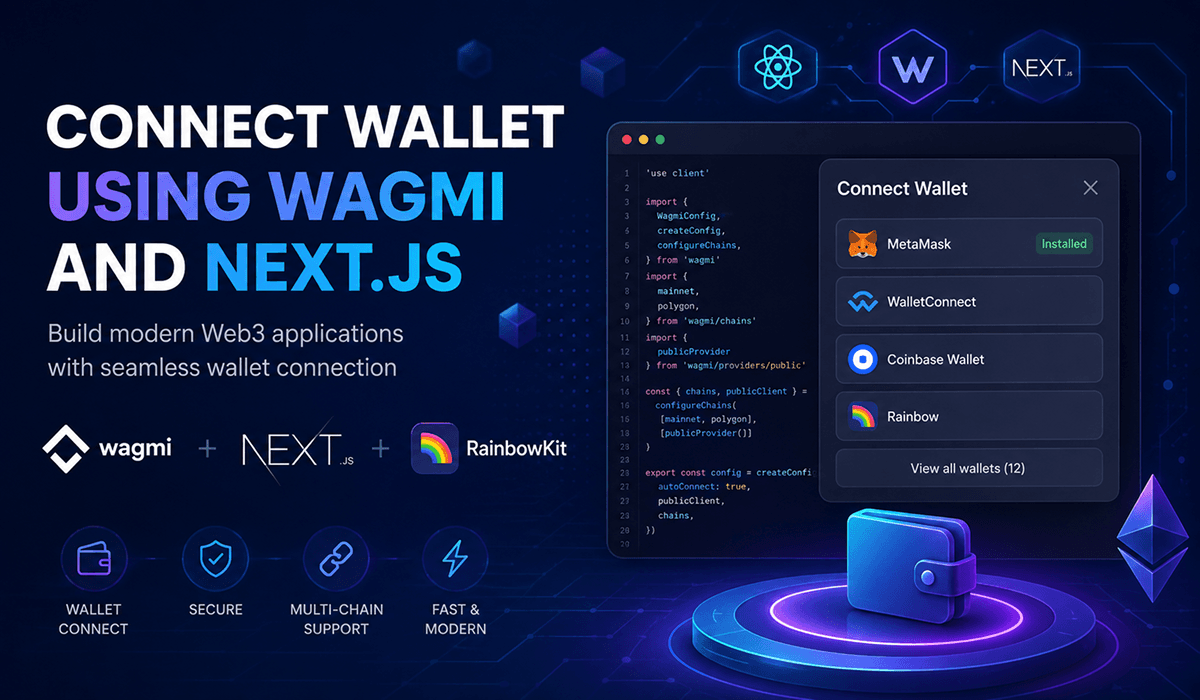
Web3 changes this model by enabling decentralized applications known as dApps. Users interact directly with blockchain networks using crypto wallets instead of relying entirely on centralized accounts.
Through Web3, individuals can own digital assets, participate in decentralized finance, trade NFTs, and contribute to decentralized autonomous organizations known as DAOs.
The Relationship Between Blockchain And Web3
Blockchain serves as the foundation of Web3 infrastructure. Without blockchain technology, Web3 ecosystems could not exist.
Blockchain provides secure transaction systems, decentralized storage, smart contracts, and token economies. Web3 uses these blockchain capabilities to build decentralized internet applications.
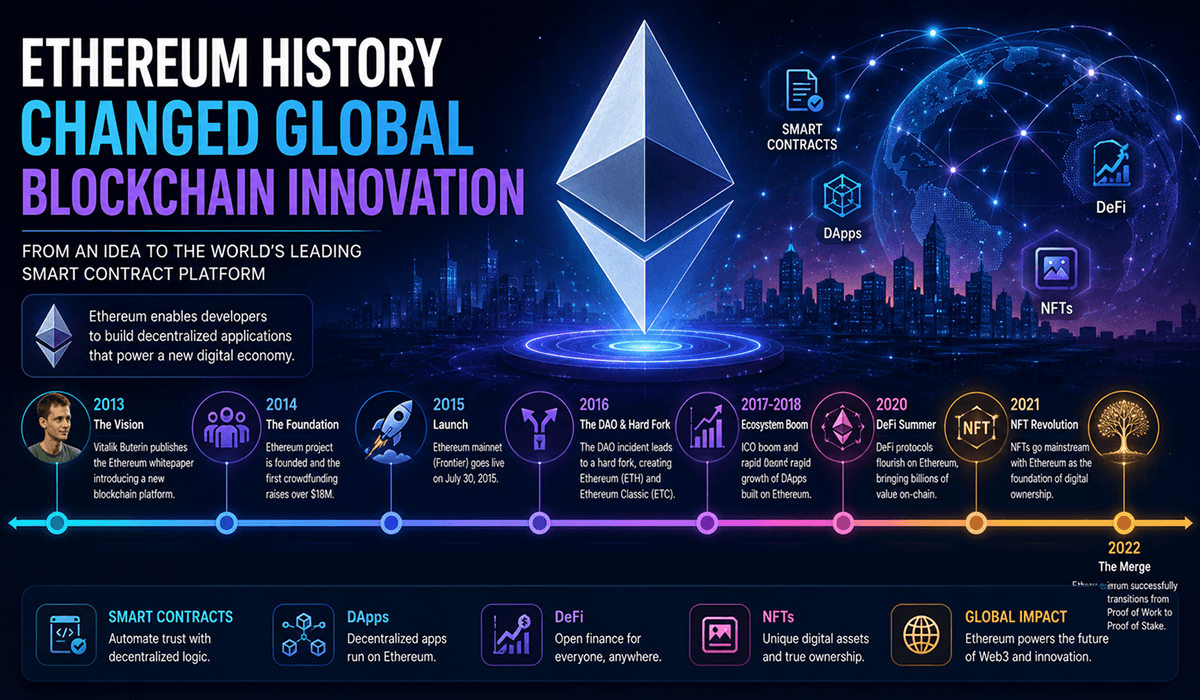
Ethereum became one of the most influential blockchain platforms because it introduced programmable smart contracts. These smart contracts allow developers to create decentralized applications across gaming, finance, social media, and digital identity sectors.
Popular Web3 Applications
Web3 technology is expanding into multiple industries worldwide. Decentralized Finance or DeFi enables users to lend, borrow, trade, and earn interest without traditional banks.
Non-Fungible Tokens or NFTs provide proof of ownership for digital art, collectibles, gaming items, and virtual assets.
Blockchain gaming allows players to own in-game assets and trade them freely across marketplaces.
DAOs enable communities to govern projects collectively using blockchain voting systems.
Web3 social platforms focus on privacy and content ownership, giving creators more control over monetization.
Advantages Of Blockchain And Web3
Blockchain and Web3 technologies offer several advantages for businesses and individuals. Users gain greater ownership of digital assets and personal data. Transactions become more transparent and globally accessible.
Businesses can reduce operational costs by automating processes with smart contracts. Developers can create open ecosystems without relying heavily on centralized corporations.
Financial inclusion also improves because decentralized finance platforms provide services to people without access to traditional banking systems.
Challenges Facing Blockchain And Web3
Despite rapid innovation, blockchain and Web3 still face challenges. Scalability remains a major issue for many blockchain networks because transaction processing speeds are limited compared to traditional systems.
Regulation uncertainty creates legal concerns for businesses and investors. Governments worldwide continue developing policies regarding cryptocurrencies and decentralized technologies.
User experience is another challenge because blockchain applications can be difficult for beginners to understand.
Security risks such as smart contract vulnerabilities and phishing attacks also remain concerns within the industry.
The Future Of Blockchain And Web3
The future of blockchain and Web3 appears highly promising. Major companies, financial institutions, and technology organizations are investing heavily in decentralized technologies.
Artificial intelligence, gaming, supply chain management, healthcare, and digital identity systems are expected to integrate blockchain solutions further.
As blockchain scalability improves and Web3 platforms become more user-friendly, mainstream adoption will likely increase significantly over the coming years.
Developers worldwide continue building decentralized ecosystems that prioritize transparency, ownership, and freedom. Web3 may eventually redefine how humans interact online by creating a more open and community-driven internet environment.
Conclusion
Blockchain and Web3 represent major technological innovations shaping the future digital economy. Blockchain provides secure decentralized infrastructure, while Web3 creates internet applications that give users greater control over their digital lives.
Although challenges remain, these technologies continue attracting global attention because of their potential to transform finance, gaming, business operations, and online interactions. Understanding blockchain and Web3 is becoming increasingly important for businesses, developers, investors, and internet users seeking opportunities in the rapidly evolving digital landscape.